The Allure of the Pro Studio vs. Your Creative Reality
Walk into a high-end recording studio, and you’re immediately struck by the sight: rows of gleaming outboard gear, custom-built mixing consoles that look like spaceship cockpits, and microphones that cost more than some cars. For many aspiring artists, producers, and songwriters, this image often sparks a debilitating thought: “I can’t make great music until I have all that.” This, my friends, is one of the most pervasive and paralyzing myths in independent music today.
📹 Watch the video above to learn more!
It’s a myth that holds back countless creative journeys, leading to endless gear obsession, financial strain, and ultimately, inaction. At Musiketo, we believe in empowering creators, not intimidating them. Let’s dismantle the “perfect studio” fallacy and reveal why the most powerful tool you possess is not found in an equipment catalog, but in your ears, your mind, and your existing space.
The Trap of “Perfect Gear”: Debunking the Studio Myth
Where the Myth Comes From
The idea that professional-grade music demands professional-grade equipment is deeply ingrained. Part of it comes from historical context; for decades, cutting-edge music *did* require immense investments in technology and space. Another part is savvy marketing from gear manufacturers, designed to make you feel incomplete without their latest offering. Social media also plays a role, showcasing elaborate setups that look impressive but don’t tell the full story of the music being made.
The truth is, while top-tier gear offers certain advantages, it’s rarely the sole determinant of a track’s quality. A terrible song recorded on a million-dollar console is still a terrible song. A brilliant composition performed passionately through a modest setup can captivate millions.
Why Skill Outweighs Equipment
Think of it this way: a master chef can create an incredible meal with basic kitchen tools and fresh ingredients. A novice, given the most expensive appliances, might still struggle to make something palatable. Music production is no different. Your understanding of acoustics, microphone placement, gain staging, arrangement, and mixing fundamentals will always trump the brand name on your interface or microphone.
Learning to truly listen, to identify unwanted frequencies, to create space in a mix, or to capture a compelling performance – these are skills. Skills are honed through practice, experimentation, and critical self-evaluation, not through credit card statements. Many beloved tracks in music history were recorded in unconventional, humble settings with what would now be considered incredibly basic gear. Their magic came from the ideas, the performances, and the ingenuity of the creators.
Maximizing Your Home Setup: Practical Steps
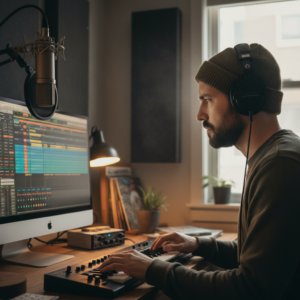
Instead of dreaming about what you don’t have, focus on optimizing what’s already at your fingertips. Your bedroom, living room, or even a quiet closet can become a surprisingly effective creative hub.
Taming Your Space: DIY Acoustics
The biggest challenge in home recording isn’t your microphone, it’s often your room. Reflective surfaces (bare walls, hard floors, windows) cause echoes and harsh frequencies that muddy your sound. You don’t need expensive acoustic panels to start. Here’s how to improvise:
- Soft Furnishings: Heavy curtains, thick rugs, bookshelves filled with books, and upholstered furniture absorb sound.
- Blanket Forts: For vocal recording, hanging heavy blankets or duvets around your microphone can create a surprisingly effective, deadened vocal booth.
- Strategic Placement: Avoid recording in the dead center of a square room, which can exaggerate standing waves. Try positioning your mic a few feet from a wall, perhaps facing a window or a bookshelf, to minimize direct reflections.
The goal isn’t perfect sound, but rather to reduce harsh reflections and provide a clearer signal for your microphone to capture. Listen critically to how your room sounds before and after making adjustments.
Smart Software, Essential Hardware
You don’t need a massive budget to get started with functional gear:
- Digital Audio Workstation (DAW): Many excellent DAWs are free or come with your computer. GarageBand (Mac), Audacity (cross-platform), and Reaper (affordable, full-featured) are great starting points. Even free trial versions of professional DAWs like Ableton Live Lite or Logic Pro often pack immense power.
- Audio Interface: A simple 2-input, 2-output USB audio interface from brands like Focusrite, Behringer, or PreSonus provides clean preamps and allows you to connect a microphone and monitor your sound.
- Microphone: A good dynamic microphone (like a Shure SM57 or SM58) is versatile and robust for vocals and instruments, or an affordable condenser microphone can offer more detail for vocals in a treated space.
- Headphones: A reliable pair of closed-back monitoring headphones (Audio-Technica ATH-M20x/M30x, Sony MDR-7506) is crucial for accurate listening without disturbing others or introducing room noise.
Resist the urge to buy dozens of plugins. Most DAWs come with a comprehensive suite of effects (EQ, compression, reverb, delay) that are more than capable of achieving professional results if you learn them well.
The Craft Over the Kit: Focusing on Fundamentals
Songwriting and Arrangement First
Before you even think about production, focus on the song itself. A well-written, emotionally resonant song with a strong melody and compelling arrangement will shine through any recording quality. Can your song stand alone with just an acoustic guitar or piano and a vocal? If not, more expensive gear won’t fix it. Spend time perfecting your melodies, harmonies, lyrics, and song structure. These are the true foundations of captivating music.
Learning Your Tools (Any Tools)
Instead of endlessly browsing gear forums, dedicate that time to mastering one DAW, one microphone, one synthesizer. Learn every feature, every parameter. Experiment with different settings. Understand how your chosen compressor works, not just what it’s called. Deep knowledge of a limited toolkit often yields better results than superficial familiarity with a vast one.
There are countless free tutorials on YouTube and educational platforms for almost every piece of software and hardware. Take advantage of them. Practice active listening – analyze how your favorite tracks achieve their sound and try to recreate elements using your own tools.
Common Pitfalls and the Path Forward
The Upgrade Obsession
A common mistake for beginners is getting caught in an endless cycle of upgrades. “If I just had that new compressor, my vocals would sound pro.” This often masks a lack of fundamental skills. Before upgrading, ask yourself if you’ve truly exhausted the creative potential of your current setup. More often than not, the answer is no.
This obsession can also lead to “analysis paralysis,” where you spend more time researching gear than making music. Remember, finished tracks are always better than perfect intentions.
Forgetting the Listener
Ultimately, your music is for an audience. And that audience cares about the emotion, the story, the rhythm, and the melody. They listen on headphones, car stereos, and sometimes even phone speakers. They don’t typically scrutinize the specific microphone model or the vintage of your EQ plugin. Focus on delivering a clear, engaging, and well-mixed performance that connects with them emotionally.
The myth of the “perfect studio” is just that – a myth. Your creativity, your skill, and your dedication are far more valuable than any piece of equipment. Embrace your current setup, learn its intricacies, and pour your heart into making music. The world is waiting to hear your unique voice, not your gear list.
Next Step: Open your DAW today, pick one song idea, and record a demo with the gear you already own, focusing purely on performance, arrangement, and capturing your unique artistic vision.