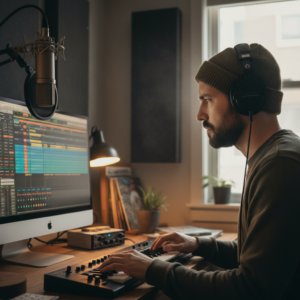
As an emerging artist, producer, or songwriter, you pour your heart into creating music. You meticulously craft melodies, layer harmonies, and sculpt rhythms. But when it comes to mixing, a common trap awaits: the relentless pursuit of loudness. You compare your work to commercial tracks, and suddenly, your mix feels weak, thin, or just not loud enough. So, you push faders, crank compressors, and smash limiters, hoping to achieve that powerful, in-your-face sound. But what if this instinct is actually sabotaging your mixes?
?? Watch the video above to learn more!
The truth is, mixing isn’t primarily about loudness. It’s about clarity, balance, and creating a compelling sonic landscape. By focusing on volume too early in the process, you risk sacrificing the very elements that make music engaging: dynamics, depth, and punch. This article will explore why the ‘loudness war’ has misled countless creators and how a quieter, more intentional approach to mixing can unlock the true power of your music.
The Loudness Illusion: Why We Fall for It
It’s easy to understand why the desire for a loud mix takes hold. Modern commercial music often sounds incredibly dense and impactful. When you play your work alongside a chart-topping track, the disparity in perceived volume can be disheartening. This instant comparison is the first step into the loudness illusion.
The Comparison Trap
We’re constantly bombarded with highly polished, commercially mastered tracks. These songs have gone through an extensive post-production process designed to optimize them for various playback systems and to achieve maximum perceived loudness without sacrificing too much quality. When you listen to your unmastered mix next to such a track, it’s an unfair comparison. Your ears are naturally drawn to the louder sound, and your brain interprets ‘loud’ as ‘better’ or ‘more professional.’ This can lead to a desperate attempt to match that volume during the mixing stage, often with detrimental results.
Misunderstanding the Production Chain
Another reason for chasing loudness too early is a misunderstanding of the audio production workflow. Many beginners conflate mixing with mastering. They view mixing as the stage where the track achieves its final broadcast-ready volume. In reality, mixing and mastering are distinct disciplines with different goals:
- Mixing: The art of blending individual tracks (vocals, drums, instruments) into a cohesive stereo soundstage, ensuring each element has its space, clarity, and impact.
- Mastering: The final polish and optimization of the stereo mix, including overall EQ, compression, limiting, and preparing the track for distribution to achieve competitive loudness targets.
Trying to achieve mastering-level loudness during the mixing stage is like trying to paint a house while the foundation is still being poured. It disrupts the natural order and leads to compromised results.
The True Purpose of Mixing: Clarity, Balance, Depth
Instead of chasing decibels, shift your focus to what mixing truly aims to achieve: a clear, balanced, and dynamic sound that serves the song. When you mix effectively, every instrument and vocal finds its place, contributing to a harmonious whole without fighting for attention.
What Mixing Isn’t About (Yet)
During the mixing stage, your primary concern shouldn’t be how loud the entire track is. Instead, ask yourself:
- Is the kick drum punchy without being overpowering?
- Are the vocals clear and intelligible, sitting well in the mix?
- Do the bass and kick have a solid, defined relationship?
- Is there enough space for all instruments, or is it muddy?
- Does the track have a good sense of depth and width?
- Are the dynamics (the difference between the loudest and quietest parts) working to enhance the emotion of the song?
By answering these questions, you address the fundamental issues of a mix. The overall loudness will be handled later.
The Power of Dynamic Range
Dynamic range is the difference between the loudest and quietest parts of your music. It’s what gives a track energy, movement, and emotional impact. When you crush your mix with excessive compression and limiting early on, you flatten this dynamic range. The result is often a mix that sounds fatiguing, lifeless, and ultimately, less powerful, even if it’s technically ‘loud.’
A mix with healthy dynamics allows elements to breathe, provides contrast, and keeps the listener engaged. Imagine a conversation where everyone is shouting at the same volume – it quickly becomes unbearable. Music is no different. Subtle shifts in volume, texture, and intensity are what make a performance captivating.
Practical Steps for a Quieter, More Effective Mix
Breaking the habit of mixing loud requires a conscious effort, but the rewards are profound. Here are some actionable steps to adopt a more effective mixing workflow:
Master Your Gain Staging
Before you even touch an EQ or compressor, ensure your signal levels are healthy. Set your input gains so that individual tracks peak around -18 dBFS to -12 dBFS. This provides ample headroom, preventing clipping and allowing your plugins to operate optimally. Low input levels might sound quiet initially, but they give you room to shape the sound without immediately hitting digital overs.
The Silent Volume Sweet Spot
Mix at a comfortable, low monitoring volume. Your ears are more sensitive to frequency imbalances and dynamics at lower volumes. If something sounds good quiet, it will likely sound great loud. Mixing too loudly causes ear fatigue rapidly, leading to poor decisions like over-compensating with EQ or compression. Aim for a volume where you can comfortably hold a conversation over the music.
Reference Wisely, Not Loudly
When you do compare your mix to commercial tracks, do so briefly and at a matched perceived volume. Use a level-matching plugin or carefully adjust your monitor volume. The goal isn’t to match the overall loudness, but to compare the balance, clarity, and frequency response. What makes their kick drum cut through? How do their vocals sit? Analyze the *mix*, not just the master volume.
Take Breaks, Reset Your Ears
Your ears are your most critical tool, but they can get tired. Take regular breaks (10-15 minutes every hour) to rest your hearing and get a fresh perspective. Go for a walk, listen to something completely different, or just enjoy silence. You’ll be amazed at how much clearer you hear issues and solutions when you return.
Common Pitfalls and How to Avoid Them
Even with the best intentions, it’s easy to fall back into old habits. Be mindful of these common mistakes:
Over-Processing Individual Tracks
When you’re trying to make everything loud, you might find yourself applying excessive compression or EQ to individual tracks. This can strip instruments of their natural character and make them sound thin or artificial. Focus on subtle adjustments that enhance rather than overpower.
Premature Master Bus Compression
Resist the urge to slap a heavy compressor or limiter on your master bus early in the mixing process. While gentle bus compression can glue elements together, aggressive limiting will mask problems, make your mix sound flat, and hinder the mastering engineer’s ability to optimize the final loudness effectively.
Ignoring the ‘Why’ Behind Your Decisions
Every processing choice should serve the song. Before adding a compressor or boosting a frequency, ask yourself: