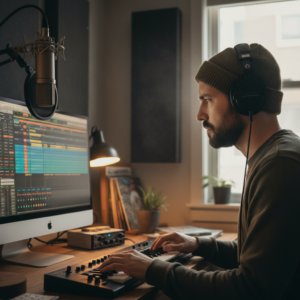
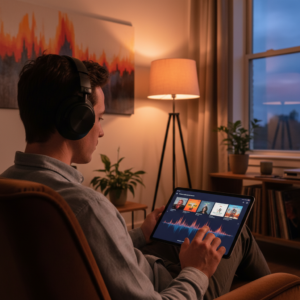
Critical listening is not about replacing enjoyment with technical analysis. It is a way to notice how a recording creates its emotional effect.
Listen in layers
On the first pass, follow only the low end. Next, focus on the vocal, then percussion, width, and background details. Concentrating on one dimension keeps the exercise manageable.
Describe before judging
Use neutral words first: close, distant, dry, bright, narrow, dense, soft, or unstable. Description helps you hear what is present before deciding whether you like it.
Compare at equal loudness
Louder audio usually sounds more exciting. When comparing two mixes, lower the louder one so the decision is based on balance and character rather than volume.
Write short notes
After each focused listen, record one or two observations. Over time, your vocabulary and recall will improve—and so will your production decisions.