The Gear Trap: Why Your Best Studio Tool Is Already Free
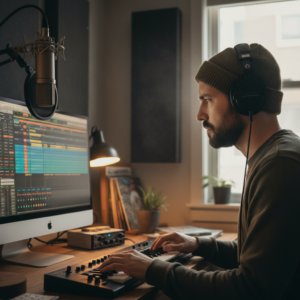
Walk into any high-end professional studio, and you’ll see walls adorned with vintage microphones, racks of esoteric outboard gear, and mixing consoles that cost more than a house. For many aspiring artists and producers, this dazzling array of equipment can feel like an insurmountable barrier. The unspoken message often seems to be: “You can’t make great music unless you have all this expensive stuff.” But what if that’s a myth, one that’s holding back countless talented creators?
?? Watch the video above to learn more!
At Musiketo, we believe independent music thrives on innovation and resourcefulness. This article will dismantle the pervasive myth that expensive gear is a prerequisite for professional-sounding music. We’ll explore why your ears, your skills, and your creative vision are infinitely more valuable than any piece of hardware, and how focusing on these fundamentals can unlock your true potential.
Deconstructing the “Expensive Gear” Myth
The idea that better gear automatically equals better music is seductive but ultimately misleading. While professional equipment offers precision, durability, and often a subtle sonic character, it doesn’t possess inherent musicality. A poorly played instrument through a top-tier microphone still sounds poorly played. A cluttered arrangement mixed on a million-dollar console remains a cluttered arrangement.
Historically, revolutionary music has been made with incredibly basic setups. Think of early punk recordings, pioneering electronic music, or countless indie bedroom projects. What defined these tracks wasn’t their pristine fidelity, but their raw energy, innovative ideas, and compelling performances. The producers and artists behind them understood that what they created and how they used their tools mattered far more than the price tag of those tools.
What Truly Defines a Great Recording?
- Performance: An engaging, well-executed performance is paramount. No amount of processing can fix a lackluster take.
- Arrangement: How instruments and vocals interact, their melodies, harmonies, and rhythms, forms the backbone of your track.
- Songwriting: A strong song with memorable hooks and emotional depth will always resonate more than a technically perfect but bland production.
- Acoustics: The sound of the room where you record and monitor profoundly impacts clarity and balance.
- Ears and Skill: The ability to critically listen, identify problems, and make informed creative decisions is the ultimate equalizer.
Mastering Your Craft: Practical Steps to Prioritize Skill
Instead of chasing the next gear purchase, invest your time and energy into honing your abilities. This approach not only saves money but also builds a more resilient and adaptable creative foundation.
1. Learn Your Fundamentals Inside Out
- Microphone Techniques: Understand different mic types (dynamic, condenser, ribbon), polar patterns, and common placement strategies for various instruments and vocals. Experiment with single-mic setups.
- Signal Flow: Grasp how sound travels from source to speaker – from input gain, through processing, to output levels.
- DAW Proficiency: Become deeply familiar with your chosen Digital Audio Workstation (DAW). Know its shortcuts, its built-in plugins, and how to navigate it efficiently. You don’t need all the features of a premium DAW; many free or affordable options like GarageBand, Cakewalk by BandLab, or the free versions of Studio One are incredibly powerful.
2. Optimize Your Existing Setup
You probably have more potential than you realize in your current gear. Focus on extracting the most quality from what you own.
- Room Treatment: Even basic acoustic treatment (rugs, thick curtains, DIY absorption panels) can dramatically improve your recording and monitoring environment. A decent pair of headphones you know well is often more reliable than untreated studio monitors.
- Gain Staging: Learn to set appropriate input and output levels at every stage of your signal chain to avoid noise and distortion.
- Strategic Plugin Use: Understand the purpose of EQ, compression, reverb, and delay. Less is often more. Don’t just slap on presets; learn what each parameter does.
3. Cultivate Critical Listening Skills
Your ears are your most important tool. Develop the ability to dissect mixes, identify frequencies, and discern spatial characteristics.
- Reference Tracks: Listen intently to music you admire on various systems. Pay attention to balance, clarity, dynamics, and how different elements sit in the mix.
- A/B Testing: Compare your mix to a professional reference track, matching levels, to identify differences in frequency balance, stereo image, and dynamics.
- Rest Your Ears: Fatigue can cloud your judgment. Take regular breaks during long mixing sessions.
Common Mistakes to Avoid
- “Upgrade Syndrome”: Constantly thinking the next piece of gear will fix your problems. This is a common trap that depletes resources without addressing core skill gaps.
- Ignoring Acoustics: Spending thousands on microphones only to record in an echoey bedroom will yield disappointing results.
- Over-processing: Trying to polish a poor performance or arrangement with excessive plugins. It’s like putting lipstick on a pig.
- Copying Without Understanding: Buying the same gear as your favorite artist without understanding *why* they use it or how to integrate it into your workflow.
The True Value of Your Creative Vision
Ultimately, the most expensive gear in the world cannot imbue your music with emotion, originality, or a unique voice. These qualities come from you – your experiences, your ideas, and your dedication to the craft. A compelling story, a memorable melody, or an innovative sound design conceived with basic tools will always outshine a technically perfect but soulless production from a top-tier studio.
So, before you eye that vintage compressor or the latest modular synth, ask yourself: have I truly mastered the tools I already possess? Have I spent enough time honing my ears and my fundamental production techniques? The answer to these questions will reveal the path to truly great music, a path paved not with gold-plated cables, but with passion and practice.
Your Next Step: Choose one built-in plugin in your DAW (like an EQ or compressor) and spend an hour learning every single parameter, watching tutorials, and experimenting with it on different sounds. Discover its full potential before thinking about buying a third-party alternative.