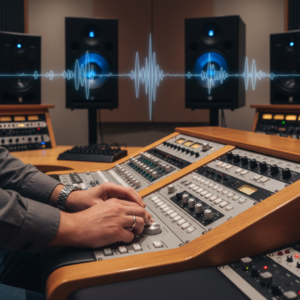
Every aspiring producer, songwriter, or independent artist eventually stares down the barrel of mixing. It’s the enigmatic final frontier where raw recordings transform into polished tracks. And almost invariably, the thought creeps in: “Do I need that $500 compressor? Will this $2000 plugin finally give me the sound I’m chasing?” This belief, that a professional mix is directly proportional to the price tag of your equipment, is one of the most persistent and damaging myths in music production.
📹 Watch the video above to learn more!
The internet is awash with dazzling plugin advertisements, gear reviews, and studio tours showcasing walls of intimidating hardware. It’s easy to fall into the trap of thinking these tools are the prerequisites for quality, rather than sophisticated means to an end. For independent creators on a budget, this can be paralyzing, leading to endless gear acquisition syndrome (GAS) or, worse, giving up before truly starting because the financial barrier seems too high. But what if we told you that the secret to a great mix has far less to do with your wallet and much more to do with your ears, your knowledge, and your approach?
Mixing, at its core, is problem-solving. It’s about taking individual audio elements and making them coexist harmoniously within a shared sonic space, ensuring clarity, impact, and emotional resonance. The tools—be they stock plugins or vintage hardware—are simply levers, knobs, and algorithms that help you achieve that balance. A seasoned chef creates a gourmet meal with basic kitchen utensils because they understand flavor profiles and techniques. Similarly, a skilled mixer, armed with deep audio principles, achieves stunning results with humble tools because they know why they’re making an adjustment, not just what button to press. Your ears, critical listening skills, and understanding of how sound behaves are your most invaluable assets, not the brand name on your compressor.
The Foundation: It’s All About the Source Material
The biggest secret to a great mix often isn’t in the mixing stage at all; it’s what happens before the mix begins. No amount of expensive processing can truly fix a poorly recorded or badly arranged track. Think of mixing as building a house – if the foundation is shaky, no amount of expensive paint or fancy furniture will make it structurally sound.
Recording Right at the Start: The “Garbage In, Garbage Out” Principle
This age-old adage remains profoundly true. A clean, well-recorded vocal track captured with a decent microphone in a reasonably treated space will always sound better than a shouty, clipped take recorded in a resonant bathroom. Focus on the performance, microphone placement, gain staging, and minimizing room reflections during tracking. These efforts pay dividends that no plugin can replicate. Prioritize getting the best possible sound at the source, and your mixing job becomes significantly easier.
Arrangement as a Mixing Tool
Before you even touch a fader, consider your song’s arrangement. Are there too many elements competing for the same sonic space? Does the bass guitar clash with the kick drum’s low end? Is the vocal getting lost amidst dense instrumentation? A well-arranged track where instruments have their own “space” – both in frequency and time – inherently sounds clearer and more balanced. Sometimes, the best mixing move is to simply remove an unnecessary element or adjust an instrument’s part to complement, rather than compete with, others.
Mastering Your Ears, Not Just Your Plugins
The human ear is an incredible instrument, and developing your listening acuity is a continuous journey that yields far greater returns than any gear purchase. It’s about learning to identify issues and understand how different sonic elements contribute to the overall picture.
Active Listening and Reference Tracks
Don’t just listen to music; actively listen. What makes your favorite professionally mixed tracks sound so good? How do the drums sit in the mix? Where does the vocal live? How much reverb is there? Use high-quality reference tracks in a similar genre to yours, loading them into your mixing session. Regularly A/B your mix against these references to train your ears and identify areas for improvement in balance, depth, and overall spectral character. This practice helps you understand what a “finished” sound truly is.
The Power of Fundamental Tools (EQ, Compression, Reverb, Delay)
The vast majority of professional mixes are built using the fundamental tools: equalization (EQ), compression, reverb, and delay. While specialized plugins offer unique flavors, the core principles applied by these basic processors are universal. Learning to master a stock EQ or compressor in your Digital Audio Workstation (DAW) will teach you far more about shaping sound than endlessly demoing new, complex units. Understand what each tool does, why you’re using it, and how it affects the sound. This knowledge is transferable to any plugin you might eventually acquire.
Practical Steps for a Better Mix (Even on a Budget)
Here’s how to apply these principles to your next mixing session, using the tools you already have:
- Start with Balance: Levels First. Before touching any EQ or compressor, get your faders right. Start with the most important element (often the vocal or lead instrument), set its level, and then bring in other elements, one by one, balancing them against the first. This establishes fundamental relationships and often solves many perceived “EQ problems” before they arise. Listen in mono occasionally to check for phase issues or elements disappearing.
- Problem-Solving with Surgical EQ. EQ is for shaping, but also for cleaning. Use narrow cuts to remove problematic resonant frequencies, hums, or muddiness. Boosts should be used sparingly and broadly to enhance desired characteristics. Think of EQ as creating space for each instrument to breathe, carving out distinct homes in the frequency spectrum. Don’t just apply EQ because “it’s what you do”; apply it to solve a specific audible problem.
- Creating Depth and Space. Not everything needs to be up front. Use volume, panning, and time-based effects like reverb and delay to create a sense of depth and width. Panning instruments left and right opens up the stereo field. Shorter, drier reverbs make an element feel closer, while longer, more diffused reverbs push it further back. Use subtle delays to add texture without clashing with the main rhythm.
- Compression for Control and Punch. Compression isn’t just about making things loud; it’s about dynamic control and shaping transients. Use it to even out vocal performances, add punch to drums, or glue elements together. Start with conservative settings, focusing on how it changes the feel of the sound, not just its loudness. Understand attack, release, ratio, and threshold, and experiment to hear their individual impacts.
Common Pitfalls to Avoid
Even with the right mindset, new mixers often fall into traps that undermine their efforts.
- Over-processing Everything. It’s tempting to throw a dozen plugins on every track. Resist this urge. Every plugin, no matter how subtle, imparts its own character and and can introduce artifacts. Less is often more. If you can achieve the desired effect with one or two plugins, stop there. The goal is clarity and impact, not a showcase of your plugin collection.
- Mixing in Isolation. Mixing a track without ever referencing other music or taking breaks can lead to tunnel vision. Your ears get fatigued, and you lose objectivity. Take regular breaks (15 minutes every hour) and listen to your mix on different systems (headphones, car stereo, phone speakers) to get a broader perspective.
- Chasing “The Sound” of a Specific Plugin. Don’t get fixated on replicating a sound you heard in a tutorial using a specific, expensive plugin if you don’t have it. Understand the principles behind what that plugin is doing (e.g., specific EQ curve, type of compression) and try to achieve a similar result with the tools you possess. Often, 90% of the effect can be achieved with stock tools and creativity.
The myth that expensive gear guarantees a professional mix is a powerful barrier, especially for independent creators. By understanding that mixing is a skill-based craft, rooted in critical listening, effective problem-solving, and a deep understanding of fundamental audio principles, you empower yourself to create incredible music with the tools you already have. Focus on refining your ears and mastering the basics, and you’ll find that your budget is far less limiting than you once imagined.
Your Next Step: For your next mixing session, commit to using only the stock EQ and compressor that come with your DAW on every track. Spend your time truly listening to how each parameter affects the sound, and focus on solving problems with these foundational tools before considering any fancy alternatives.